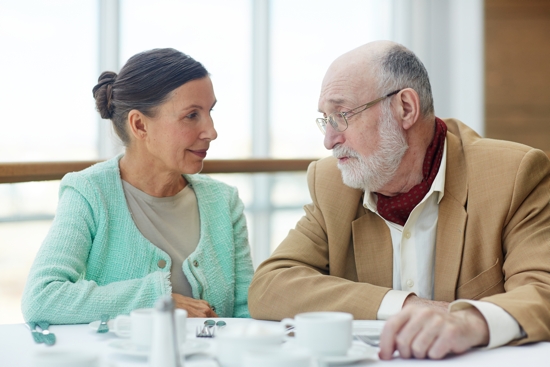
Learning to talk productively with one’s spouse can be challenging, especially if the discussion involves a sensitive subject one has tried to talk about in the past.
I think some of the most difficult sessions I had with couples when I worked as a Christian licensed marriage and family therapist were navigating such discussions, which often gravitated toward disagreements. There often appeared to be no middle ground, and each thought the only solution was for the other to compromise.
In our culture, no one wants to lose, including those who are married. As I worked with couples to help them listen to one another and respect a position that often opposed their own, I used a list of conflict resolution skills, as well as negotiation skills. I will describe these skills and how to use them to resolve conflict in a marriage or in relationships with others.
First of all, we are encouraged to avoid arguments in favor of discussions. Of course, this means we must come to the other person in a peaceful frame of mind, long before the situation reaches an emotionally heated level. This can be difficult if the situation centers on a recurring topic that we feel especially passionate about. In those instances, it will be more challenging to take a step back without becoming emotionally upset, overwhelming our limbic system. We must ask questions and withhold our responses until we understand the other person’s point of view. This requires great maturity, because we may feel defensive and simply want to protect ourselves and defend our position. We must seek common ground and a workable solution that suits both people. If the discussion breaks down, we have the opportunity to step back and refrain from saying anything offensive, because it might be difficult for the spouse to forgive.
Authors Roger Fisher, William Ury and Bruce Patton based their book, “Getting to Yes: Negotiating Agreement Without Giving In,” on the idea of what they call inventing options for mutual gain. Again, no one wants to lose, and this book seeks to help each person find a win, because if someone is losing, both people will lose. We cannot win at the expense of the other’s loss. The interesting point of this book is that couples should not seek to compromise, because the one who compromises, or gives in, is often keeping score, which will likely reignite into another argument at some point.
It can be difficult to find the middle ground in a relationship, or to seek mutual gain, in part because both spouses have histories the other does not fully understand. They might know what happened to their spouse, but because their worldview is different, they cannot grasp the full scope of the impact the event had on them. We must remember that we are looking at the world from our own perspective, which can make it difficult to act with empathy toward our spouse, because we cannot possibly fully understand every aspect of their perception of the situation.
We often read or hear about empathy, which is understanding the other’s worldview and caring about the impact a previous situation had. When we compassionately step into that space, we have the opportunity to hold our spouse’s pain, which gives us a better understanding of why their point is so important to them. Again, this requires maturity.
ACTION STRATEGIES
- Know that conflict is part of any close relationship. Do not see it as threatening to your marriage; rather, see it as an opportunity to draw closer.
- Work to engage in discussions and do your best to avoid arguments. If a discussion devolves into a disagreement, agree to step away for the moment and promise to return when emotions are less intense.
This step aligns perfectly with our Catholic faith and the beatitudes of Matthew’s Gospel, chapter 5, verses three to 10. When we embrace our spouse with understanding and concern, we build a framework for future discussions and conflict resolutions.
It is not uncommon for couples to lack conflict resolution skills because they have come to marriage and have had few, if any, disagreements. Developing the skills to resolve conflict is one of the most important means for couples to not give up on their relationship. The future of our culture depends on couples developing the skills to allow for disagreements that lead to discussions, while remaining civil and kind. The skill-building suggestions provided here are intended to help couples learn productive conflict resolution skills, thereby resolving the issues they face and providing an example of maturity for their children.
Soucheray is a licensed marriage and family therapist emerita and a member of St. Ambrose in Woodbury.