Natural family planning is used to avoid or achieve pregnancy, and as “a way to track your health as a woman,” said Alice Schwantes, a fertility care practitioner at Twin Cities FertilityCare Center in West St. Paul.
Yet women using NFP are still open to life, Schwantes said. “So, what you’re doing is, you’re saying, ‘Scientifically, the chances of conception are really low here, but we’re still opening up that decision to God. We’re never saying we’re blocking him.”
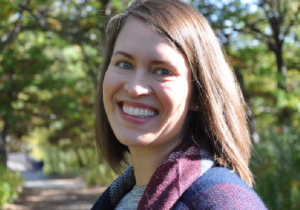
Contraception blocks that relationship with God, Schwantes said. “If you think about a barrier method, that’s exactly what it’s doing. It’s blocking you off from your partner, and it’s blocking off that relationship with the Lord.”
Schwantes recently joined “Practicing Catholic” radio show host Patrick Conley to discuss the benefits of NFP and services offered at the FertilityCare Center. Blogs and books can explain natural family planning, but the center offers a practitioner who will “walk that path with you,” she said.
Introductory sessions are usually in a group setting, Schwantes said, and if women choose to move forward, they (or couples) pick a practitioner to meet with individually. “We’re tailoring things to what her body is saying, what are her needs, what are the couple’s needs,” Schwantes said.
Schwantes quoted statistics indicating NFP had a 99.5% effectiveness rate when followed “to a T,” but in tracking couples’ use, studies found 96.8% effectiveness. She said that figure is “still pretty high,” as effectiveness for the birth control pill is 91% and 82% for condoms.
And artificial contraception often involves artificial hormones, which can bring a host of symptoms, side effects and risks for women, Schwantes said. NFP does not have any of those hormonal risks, so women using it are at less risk of developing certain cancers, mental health disorders and other ailments, she said. “There’s a really long list: heart attack, stroke, and there’s also research that says that couples who use NFP are at a lower risk of getting divorced,” perhaps because it fosters communication “within the whole relationship,” she said.
Non-Catholic, non-Christian clients are welcome at the care center, Schwantes said. To learn more about the Twin Cities FertilityCare Center and its services, visit tcnfp.org, and follow it on Facebook and Instagram.
To hear the full interview, listen to this episode of “Practicing Catholic,” which debuts at 9 p.m. July 28 on Relevant Radio 1330 AM and repeats at 1 p.m. July 29 and 2 p.m. July 30.
Produced by Relevant Radio and the Archdiocese of St. Paul and Minneapolis, the latest show also includes an interview with Archbishop Bernard Hebda of St. Paul and Minneapolis, who describes processes for discernment; and Kate Soucheray, licensed marriage and family therapist emeritus, who provides tips for building a stronger marriage and a more virtuous relationship.
Listen to interviews after they have aired at PracticingCatholicShow.com or choose a streaming platform at anchor.fm/practicing-catholic-show.