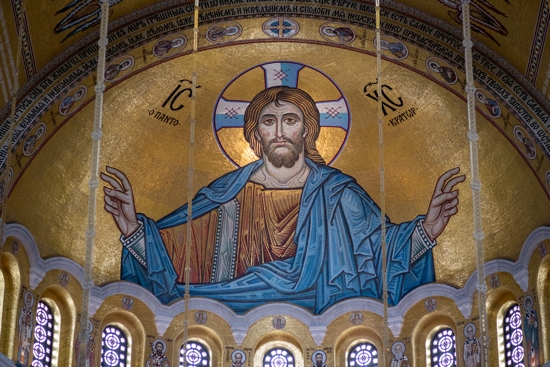
This weekend we celebrate the feast of our Lord Jesus Christ, king of the universe. This feast began in 1925 with a focus on asserting the supreme authority of Jesus Christ over human beings and their institutions. At that time, it was celebrated the Sunday before All Saints’ Day. In 1970, it was moved to the final Sunday of the Church’s year, the Sunday before Advent, and its focus became the more cosmic and end-times character of Christ’s kingship.
It leans into Advent, during which the first Sunday readings are about end-times, because Advent is not just about preparing for Christmas, but also preparing for the return of Jesus Christ. However, the placement of the feast of Christ the King at the end of the year lends a satisfying sense of the arc from the birth of Jesus to the ultimate victory of Jesus.
“King” seems odd to Americans. For 250 years we haven’t had a king and certainly feel no need to bow to kings. But we all do bow to something. It might be money, it might be status, or power, or notoriety, celebrity, sleep, technology. Who will we choose as king? It is not a matter of when or even if; we all, when we are honest with ourselves, worship something.
What should we bow to? Jesus, the king of the universe, is the best candidate.
In the first reading, Ezekiel, a prophet during the Babylonian Exile, relates the voice of God. The kings and rulers had been shepherding themselves rather than the people. The ancient kings had authority, but also the responsibility to care for their people. The kings had failed, and the kingship of David’s line went down with them.
In the Gospel, we have the marvelous parable of the final judgment. This is also the last public preaching of Jesus in the Gospel according to Matthew. It reads like an open book test. We are graded on how we have treated others, specifically the hungry, thirsty, naked, lonely, sick and imprisoned. Strikingly, in the parable, both the goats and the sheep are surprised. When did we, when did we not, do these things for you? The great king of the universe disguised himself and identified himself with the lowly, not the powerful.
Judgment is something we don’t like to consider. We typically consider it accusatory, and in our modern mindset we often think a loving God will not judge us. But judgment is one of those final four things — death, judgment, heaven and hell. It is important for us to think of death sometimes; we will all get there. Death gives some meaning and impetus to life. Reflection on it forces us to consider, what sort of person am I becoming?
Judgment, as this parable shows, is not only about our failures, but about the good things we have done as well. The good we have done is not forgotten, nor are those people who are overlooked. Judgment concerns whether we recognized the dignity of others, and whether our actions bear fruit. We ought not to use mercy as an excuse to not do good, but we also ought not to think our sin is stronger than God’s mercy when we return to God.
Kings have fallen due to self-importance, scandal and attack. Jesus Christ the king of the universe remains, the humble king, one frequently attacked and bearing the scandal of the cross. He is our judge, but also our advocate. We’ve seen the test answers already. We only have to see, consider and act to ace the test.
Father Mader is pastor of St. Joseph in Waconia.